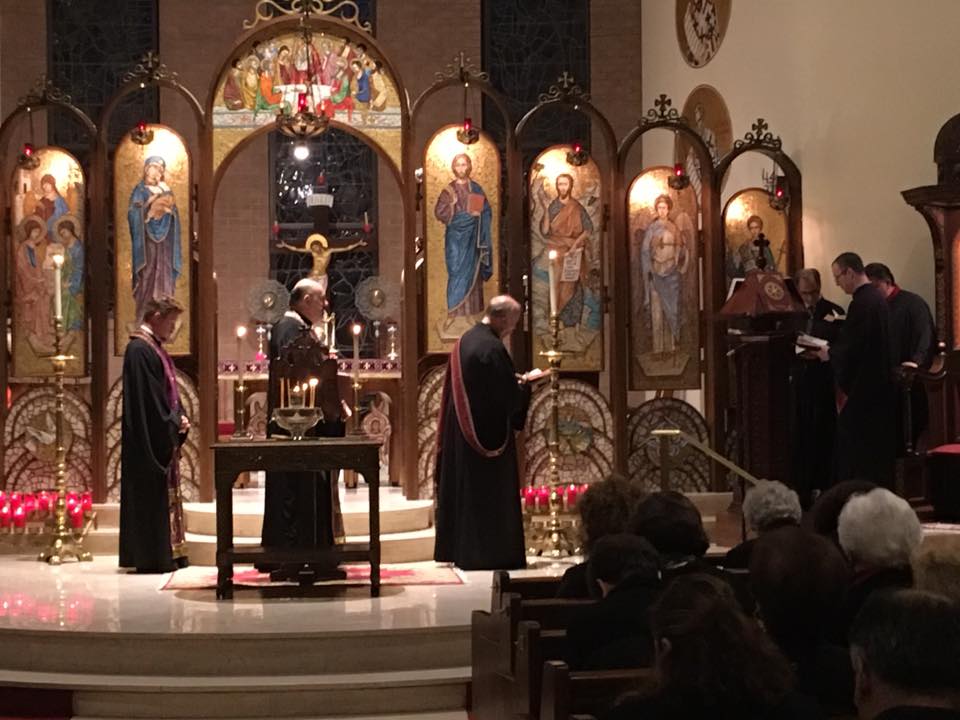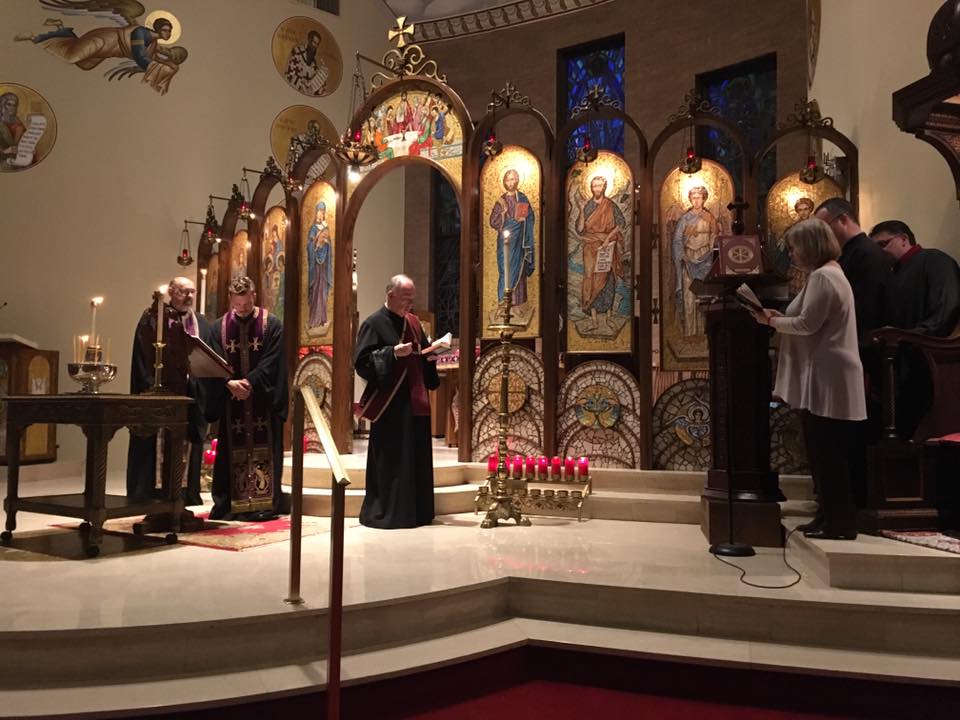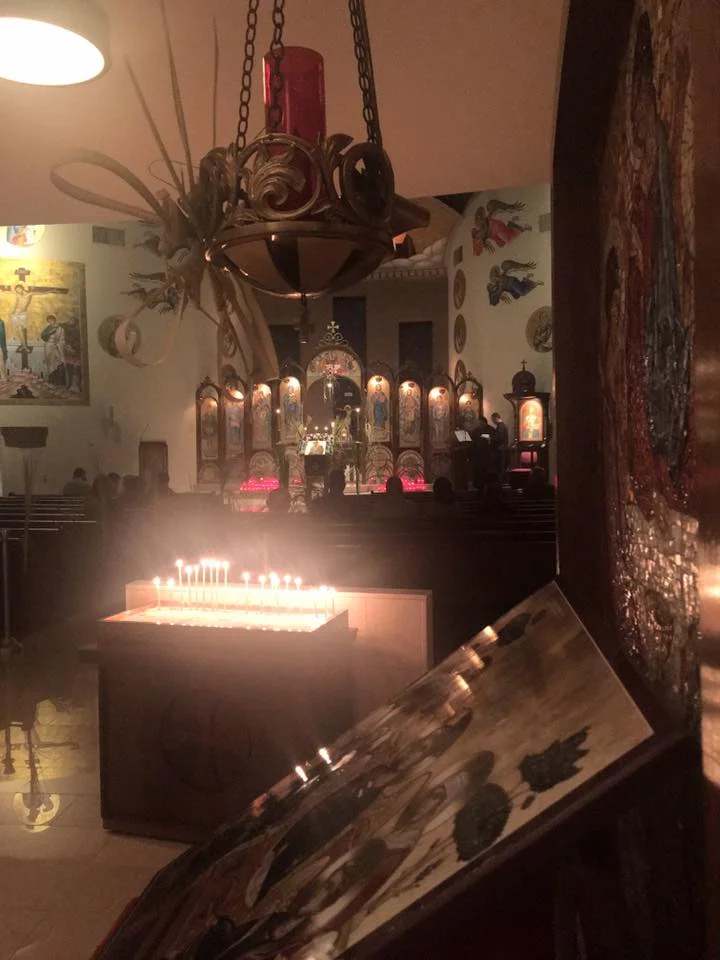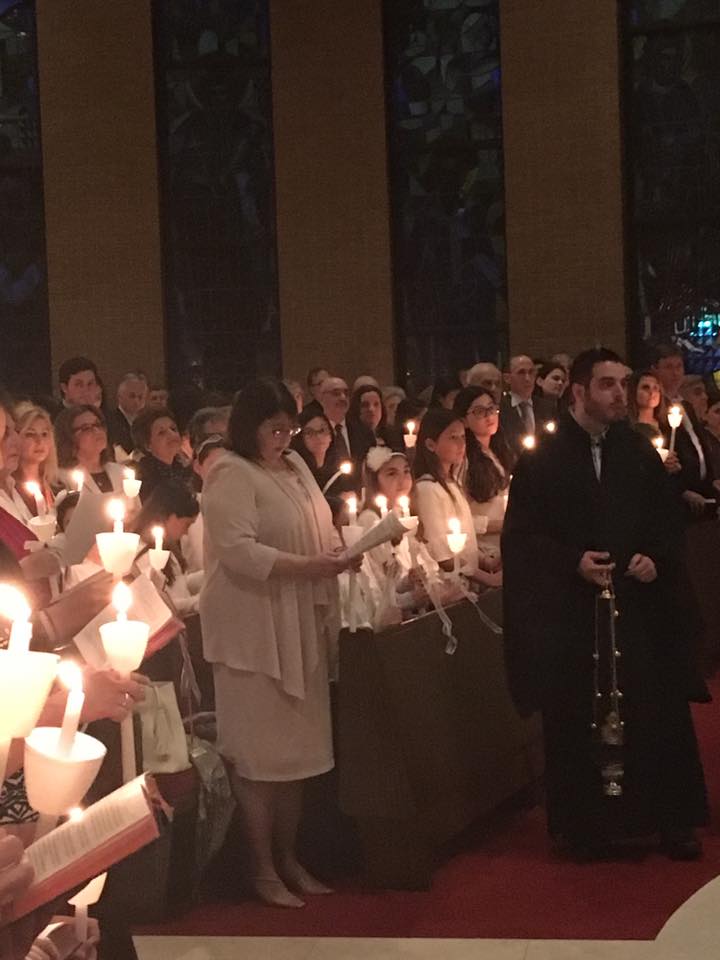
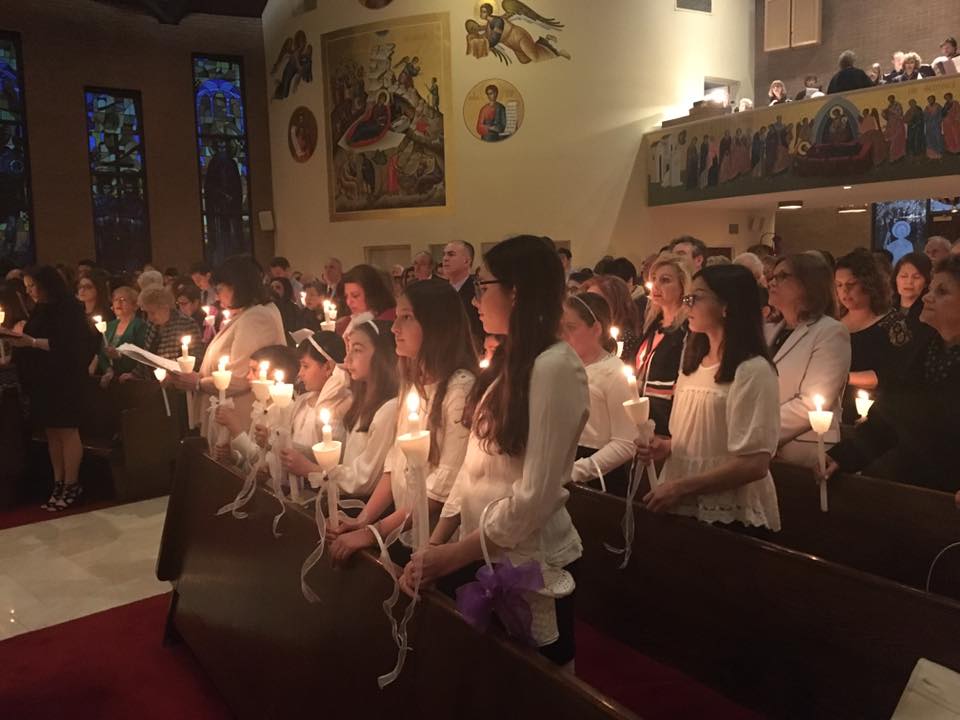
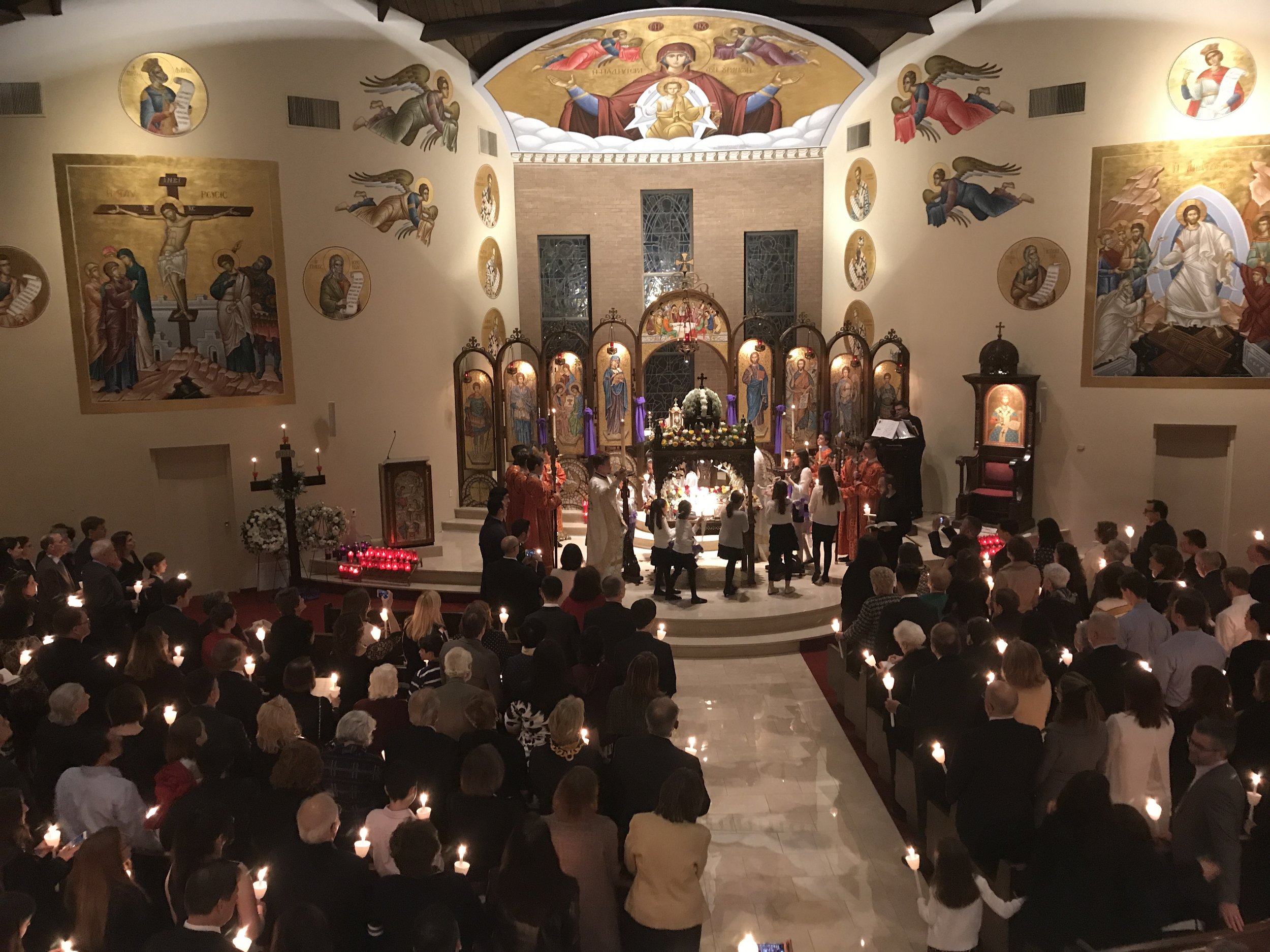
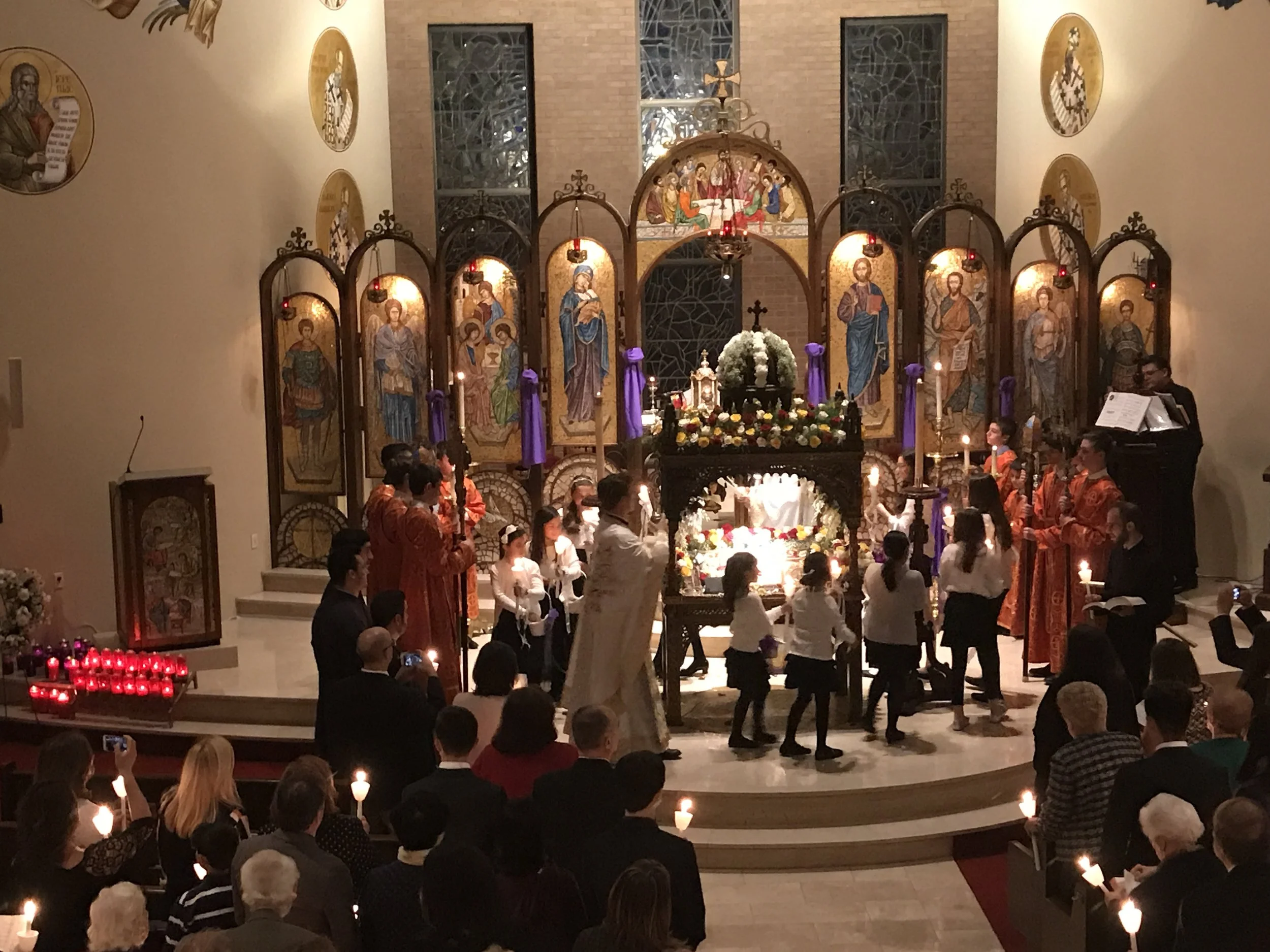
Holy Week Highlights: Good Friday Evening

Significance of this Service

Source: Goarch.org

"Do not weep for me, but weep for yourselves..."
(The service is Matins of Saturday morning sung by anticipation, on Friday evening.)
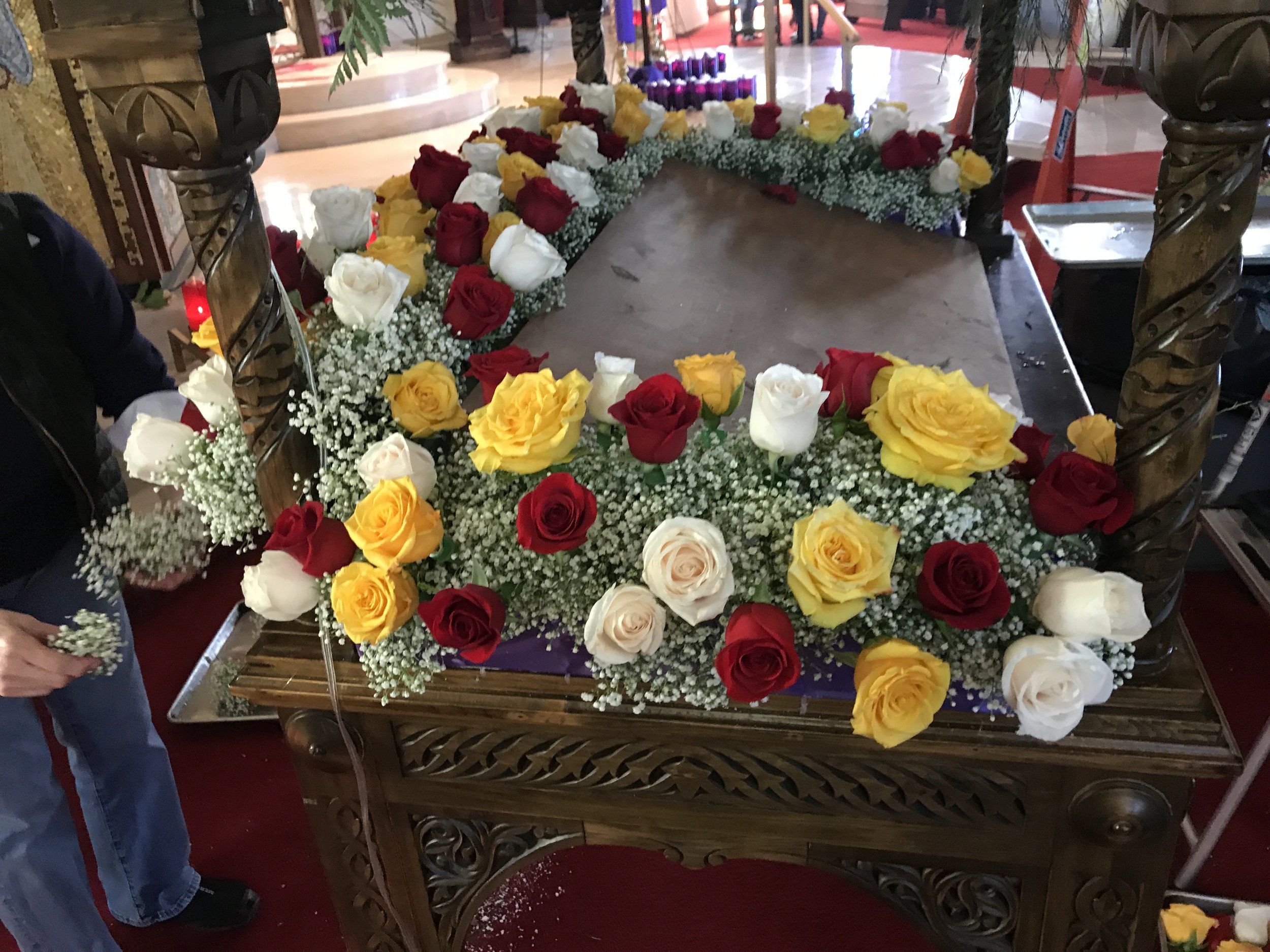
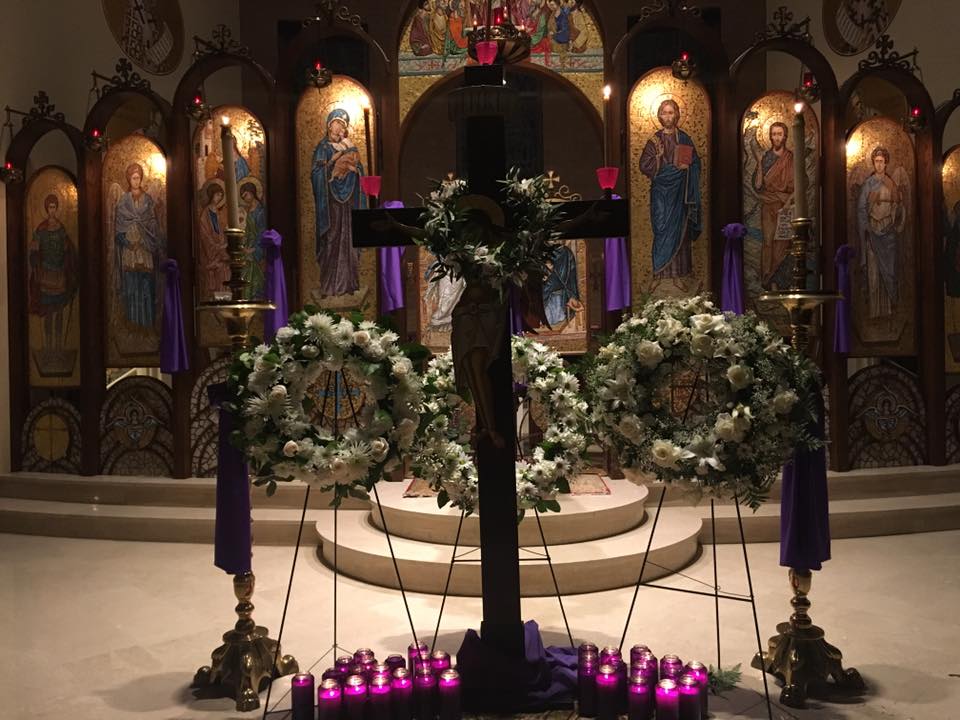
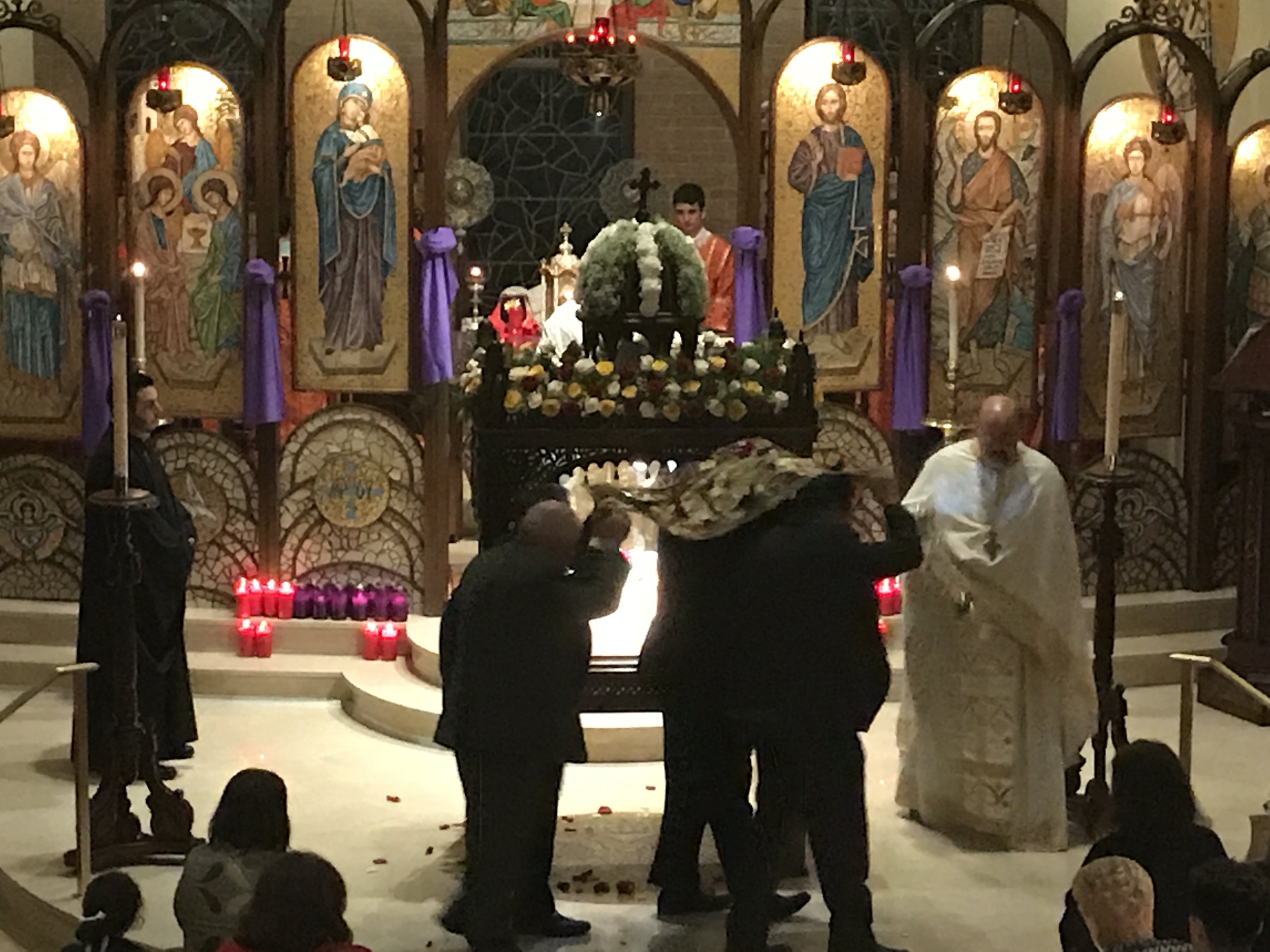
It consists of psalms, hymns, and readings dealing with the death of Christ, in contrast to His divinity, and in expectation of His Resurrection. One of the hymns relates: "He who holds all things is raised up on the Cross and all creation laments to see Him hang naked on the Tree." The thoughtful and well-written Odes, sung by the choir, compare the Compassion of God and the cruelty of man, the Might of God and the moral weakness of man. The Odes picture all Creation trembling when witnessing its Creator hung by His own creatures: "Creation was moved...with intense astonishment when it beheld Thee hung in Golgotha." The Odes remind us of the vision of Isaiah, who saw Christ, "the unwaning light of the manifestation," and cried aloud, "The dead indeed shall arise and all those on earth shall rejoice." During this service, the Body of Christ is carried in procession around the church. In some parishes, the entire flower-bedecked Sepulcher, symbolizing the Tomb, is carried in the procession.
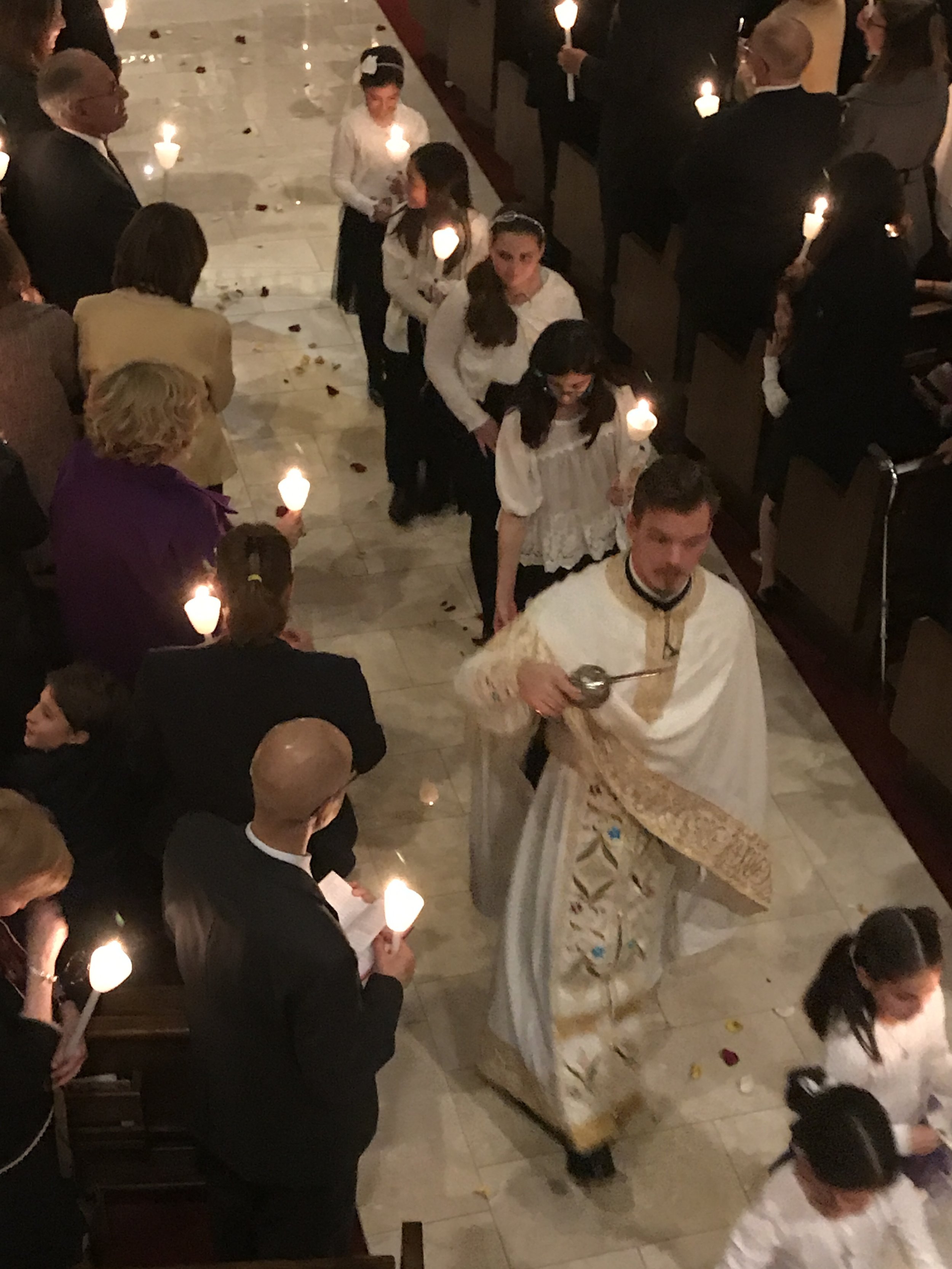
The entire congregation joins in singing the three parts of the "Hymns of Praise" (there are approximately 300 hymns, but only a few are sung). After these hymns are sung, the priest sprinkles the Sepulcher and the whole congregation with fragrant water. There is a simultaneous praise of both the Crucifixion and Resurrection of Christ with their purpose of the redemption of man. We no longer lament the sufferings of the Crucified One; we now lament chiefly for our own sins because we are far from God. So these services should have a rather personal meaning of repentance and of strong faith in God.
Christians observe Good Friday with fasting, prayer, cleanliness, self-examination, confession, and good works, in humility and repentance so that the Grace of the Cross might descend upon them.
The Gospel reading is Matthew 27:62-66.

Holy Week Highlights: Good Friday Afternoon

Significance of this Service

Source: Goarch.org

"Father, forgive them for they know not what they do..."
(The service is Vespers sung on Friday afternoon.)
The Vespers of Friday afternoon are a continuation of the Royal Hours. During this service, the removal of the Body of Christ from the Cross is commemorated with a sense of mourning for the terrible events which took place. Once more, excerpts from the Old Testament are read together with hymns, and again the entire story is related, followed by the removal from the Cross and the wrapping of the Body of Christ with a white sheet as did Joseph of Arimathea. Apostle Paul, interpreting the dreadful event, exhorts the Church: "For the word of the cross is folly to those who are perishing, but to us who are being saved it is the power of God...we preach Christ crucified...the power of God and the wisdom of God." (1 Cor. 1: 18f.)
As the priest reads the Gospel, "and taking the body, Joseph wrapped it in a white cloth," he removes the Body of Christ from the Cross, wraps It in a white cloth, and takes It to the altar. The priest then chants a mourning hymn: "When Joseph of Arimathea took Thee, the life of all, down from the Tree dead, he buried Thee with myrrh and fine linen...rejoicing. Glory to Thy humiliation, O Master, who clothest Thyself with light as it were with a garment." The priest then carries the cloth on which the Body of Christ is painted or embroidered around the church before placing It inside the Sepulcher, a carved bier which symbolizes the Tomb of Christ. We are reminded that during Christ's entombment, He descends into Hades to free the dead of the ages before His Incarnation.
The Gospel readings which relate these events are: Matt. 27:1-38; Luke 23:29-43; Matt. 27:29-54; John 19:31-37; Matt. 27:55-61. Good Friday is the only day in the year on which the Divine Liturgy is not officiated.
Today, the devoted Christian ponders in his heart the deep meaning of the Seven Last Words of Christ uttered on the Cross, the first Divine Pulpit of Christianity.

Holy Week Highlights: Good Friday Morning

Good Friday Morning

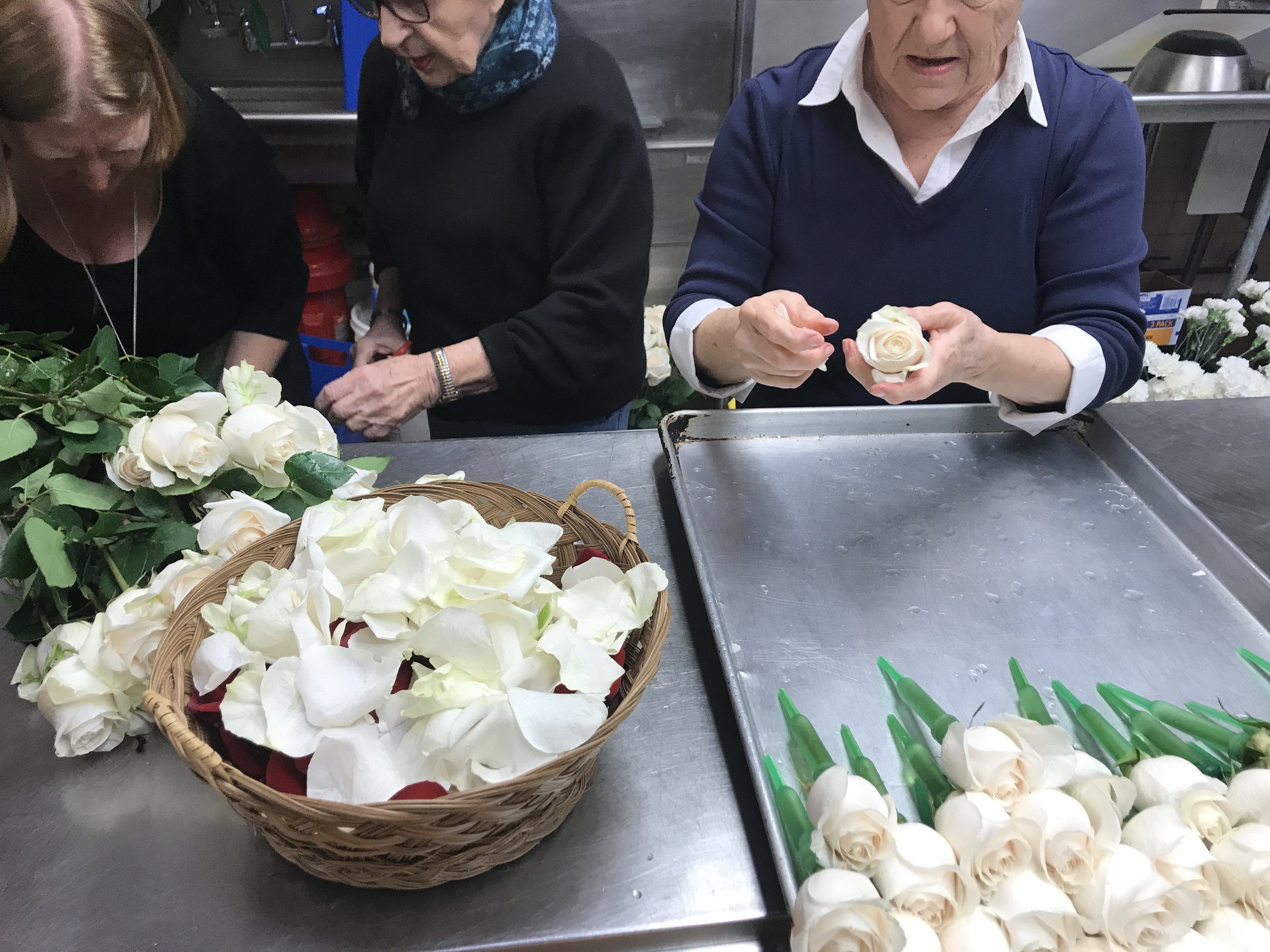
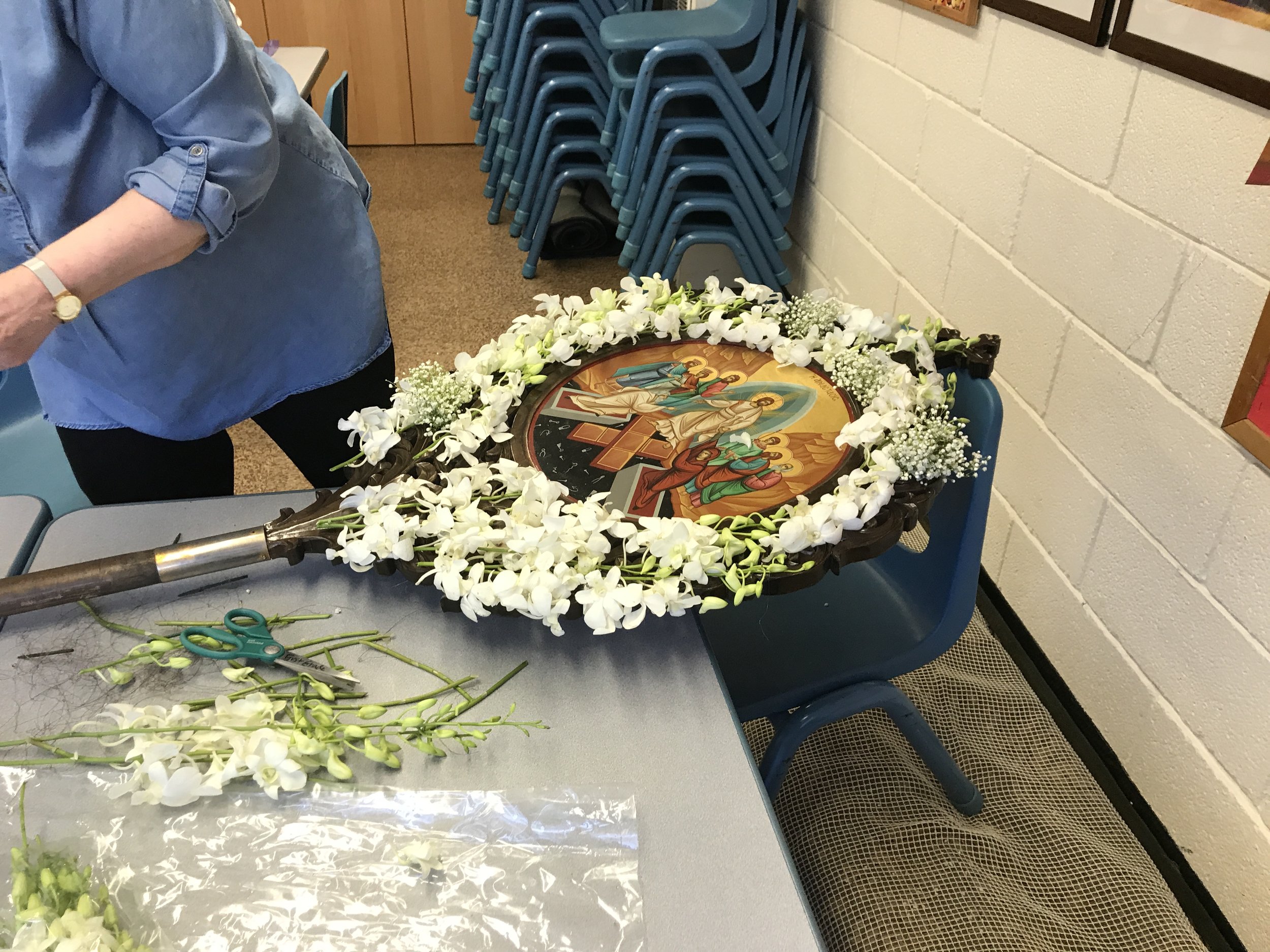
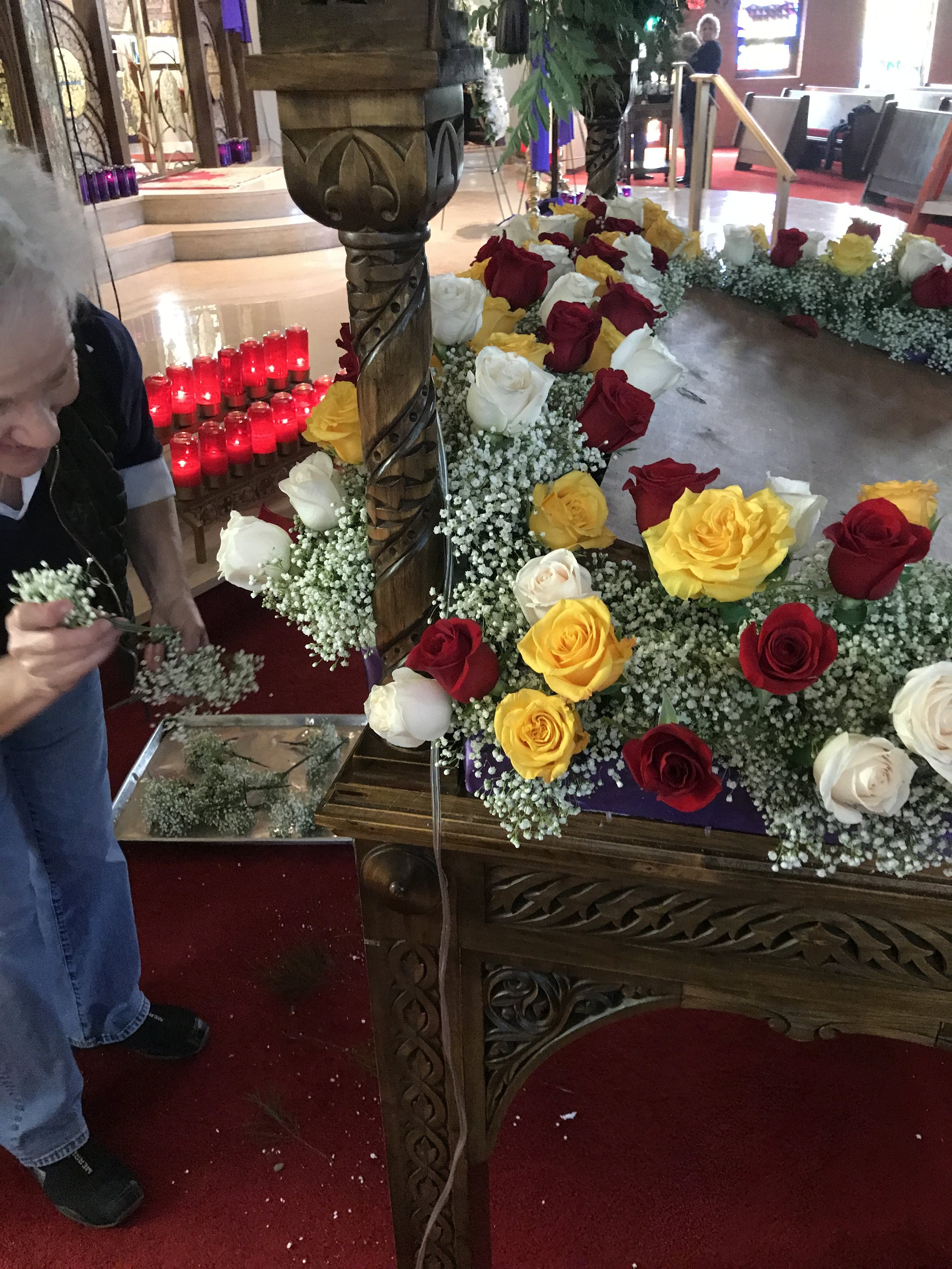
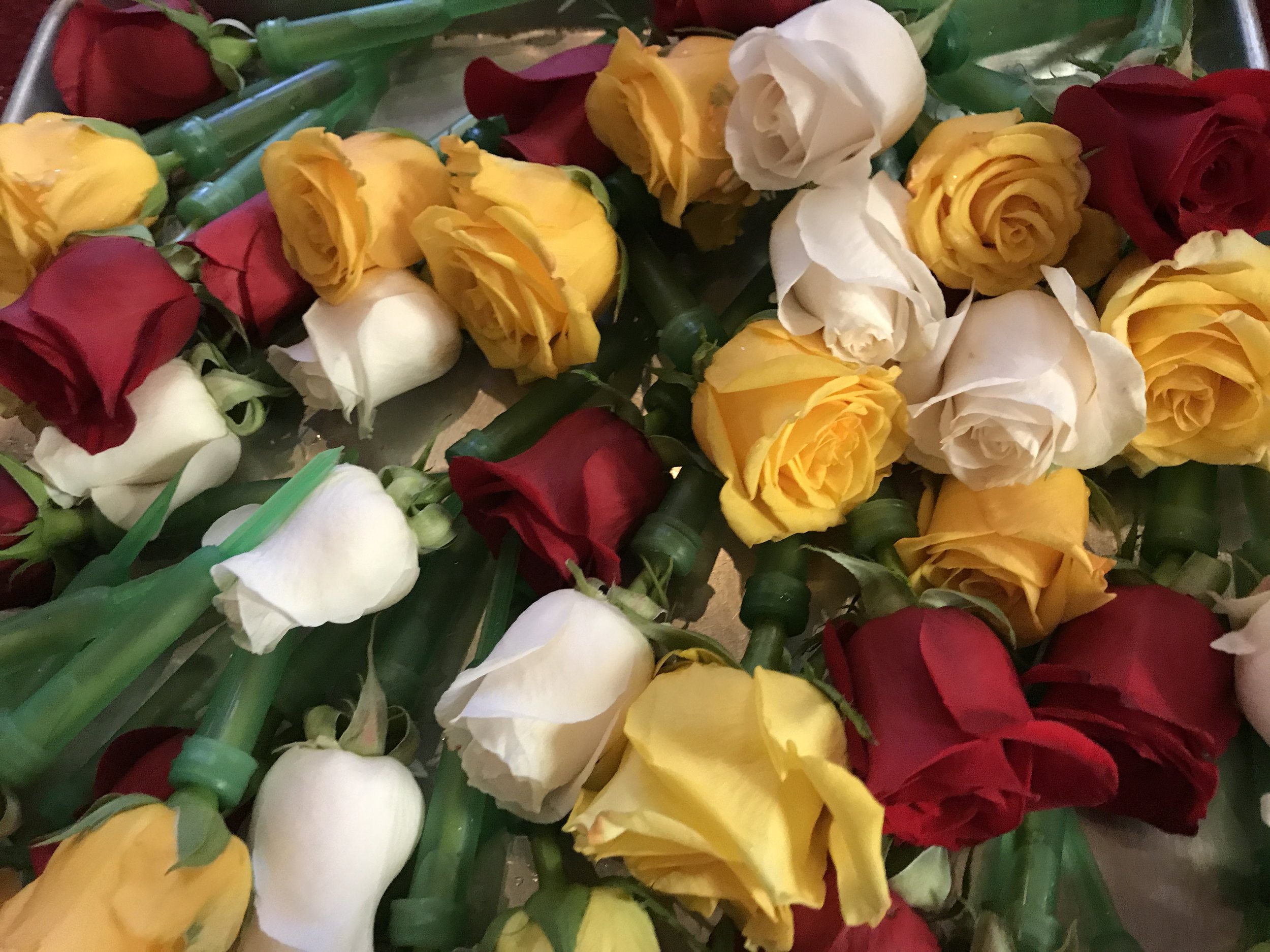
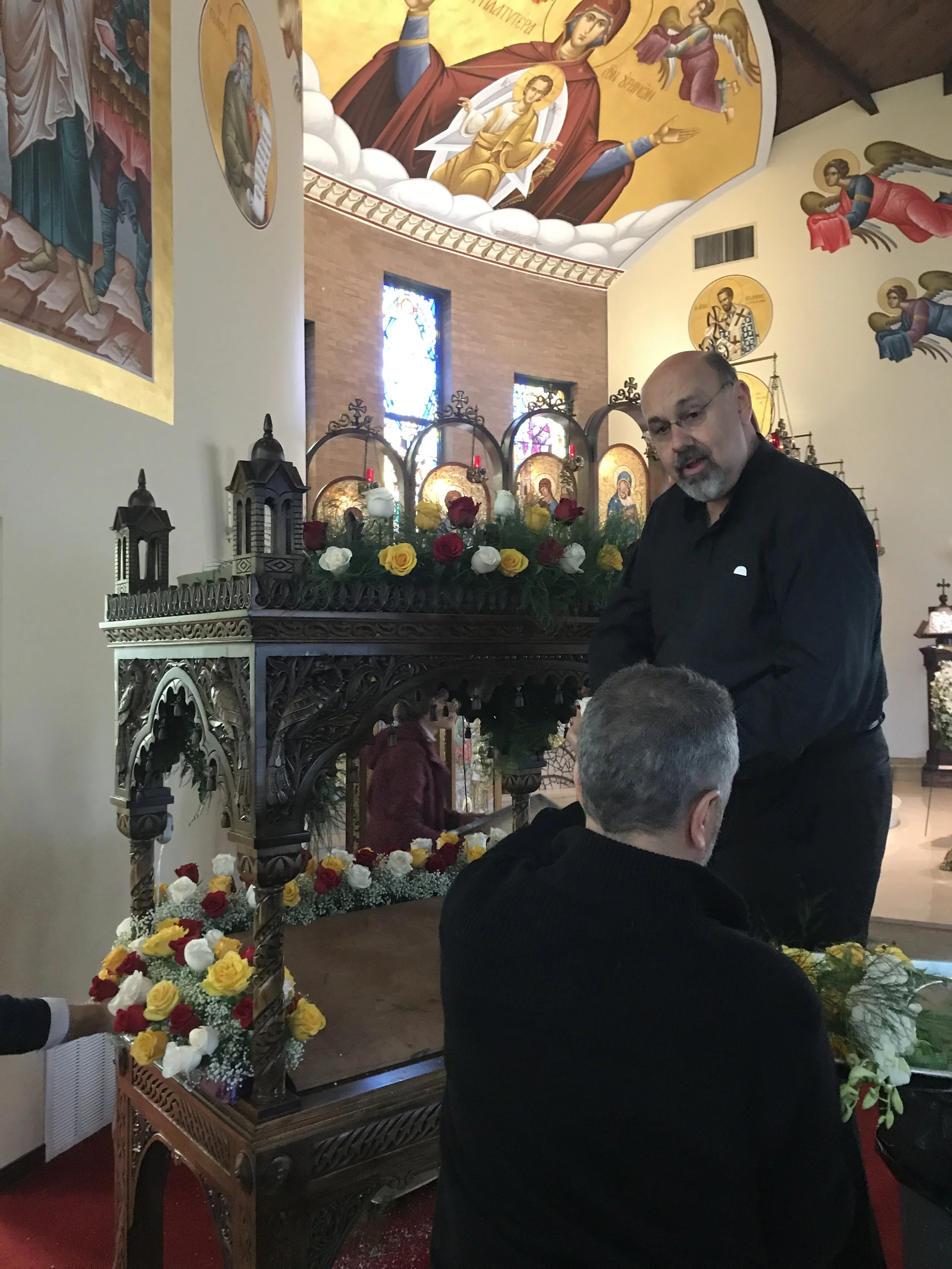
The Holy Trinity Community comes together to prepare our church for the Good Friday Services.

Significance of the Royal Hours

Source: Goarch.org

"They cast lots upon my vesture..."
According to the Hebrew custom, the "Royal Hours," four in number, are read at this time. These services consist of hymns, psalms, and readings from the Old and New Testaments, all related prophetically and ethically to the Person of Christ. In some churches, the "Hours" are read in the afternoon, before the Vesper services.

Holy Week Highlights: Holy Thursday Evening

Significance of this Service

Source: Goarch.org

"We worship Thy passion, O Christ..."
(The service of the HOLY PASSION of our Lord Jesus Christ. The service is Matins of Friday morning sung by anticipation, on Thursday evening.)
Good Friday celebrates the holy, saving, and awesome Passion of Christ. To take away our sins, Christ willingly endured spitting, scourging, buffeting, scorn, mocking, and purple robe; the reed, sponge, vinegar, nails, spear, and above all, the Cross and Death. The confession from the cross of the penitent thief, crucified with Christ, is celebrated. This service is long, but its content is dramatic and deeply moving for the devout Christian. Participation in the prayers and the historical sequence of the events, as related in the Gospels and hymns, provides a vivid foundation for the great events yet to come. Following are the references of the "Twelve Gospel" readings of this service
  1. St. John 13:31 thru Ch. 18:1
  2. St. John 18:1-29
  3. St. Matthew 26:57-75
  4. St. John 18:28 thru Ch. 19:16
  5. St. Matthew 27:3-32
  6. St. Mark 15:16-32
  7. St. Matthew 27:33-54
  8. St. Luke 23:32-49
  9. St. John 19:38-42
  10. St. Mark 15:43-47
  11. St. John 19:38-42
  12. St. Matthew 27:62-66
These readings relate the last instructions of Christ to His disciples, the prophecy of the drama of the Cross, the dramatic prayer of Christ and His new commandment. The day should be devoted to reading the "Gospel of the Testament" of Christ which He left for all men. The Church services during Holy Week re-enact the events of this Gospel.
After the reading of the fifth Gospel comes the procession with the Crucifix around the church, while the priest chants the 15th antiphon: "Today is hung upon the Tree, He Who did hang the land in the midst of the waters. A Crown of thorns crowns Him Who is King of Angels. He is wrapped about with the purple of mockery Who wrapped the Heavens with clouds. He received buffetings Who freed Adam in Jordan. He was transfixed with nails Who is the Bridegroom of the Church. He was pierced with a spear Who is the Son of the Virgin. We worship Thy Passion, O Christ. Show also unto us thy glorious Resurrection."
During the Procession, the faithful Christian kneels and prays for his spiritual welfare, imitating the thief on the Cross who confessed his faith and devotion to Christ. He then approaches and reverently kisses the Crucifix.

Holy Week Highlights: Holy Wednesday Evening

Significance of this Service

Source: Goarch.org

"Anointing him sick with oil in the name of the Lord..."
(The Mysterion of Unction)
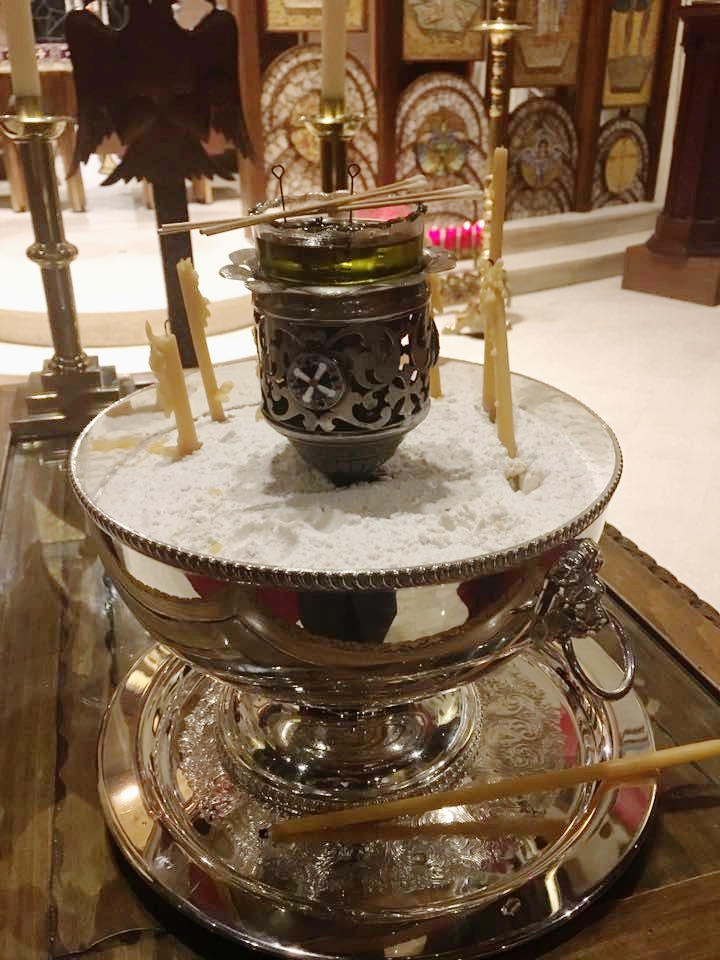
The sacred ceremony of the Mysterion of the Holy Unction takes place on this Wednesday evening, following an old custom. It is the evening of repentance, confession, and the remission of sins by the Lord, preparing the faithful to receive Holy Communion, usually the next day, Holy Thursday morning. Holy Unction is the Mysterion for cleansing sins and renewing the body and the spirit of the faithful. Holy Unction is one of the seven Sacraments of the Church, and it has its origin in the practice of the early Church as recorded in the Epistle of James (5:14-15). At the end of the service, the priest anoints the people with Holy Oil, the visible carrier of the Grace of God.

Holy Week Highlights: Holy Tuesday Evening

Significance of this Service

Source: Goarch.org

"When he came to himself...he came to his father..."
(The service is Matins of Wednesday morning sung by anticipation on Tuesday evening.)
On Wednesday of Holy Week (sung by anticipation, now on Tuesday evening), it has been ordained by the Holy Fathers of the Church that commemoration should be made of the anointing of Christ with myrrh by the woman in the house of Simon, the leper, in Bethany. Repentance was the mission of the prophets. It would be an apt one-word title for the Bible, because "repentance" was the mission of our Lord. This woman who demonstrated her repentance and her warm faith toward our Lord still presents to us the aroma of her virtue for imitation today.
On this evening is sung the beautiful "Hymn of Cassiane," probably a work of Patriarch Photius. It begins: "The woman who had fallen into many sins recognized thy Godhead, O Lord; Woe to me, saith she; receive the sources of my tears, O Thou who doth gather into clouds the water of the sea. Who can trace out the multitude of my sins and the abysses of my misdeeds? "O Thou whose mercy is unbounded."
The Gospel reading is John 12:17-50.

Holy Week Highlights: Holy Monday Evening

Significance of this Service

Source: Goarch.org

"Both watch and pray..."
(The service is Matins of Tuesday morning sung by anticipation on Monday evening.)
Tuesday of Holy Week (sung by anticipation, now on Monday evening) commemorates the parable of the Ten Virgins, Matt. 25:1-13. Ethical preparation and wakefulness are the foundations of vivid faith. The parable of the Ten Virgins is developed around the theme of the Bridegroom: "Why are Thou heedless, O my soul?...Work most diligently with the talent which has been confided to thee; both watch and pray." The hymnologist reminds us, "I do not possess a torch aflame with virtue, and the foolish virgin I imitate when it is the time for action"; and "Into the splendor of thy saints, how can I, who am unholy, enter?" The exhortation is given: "Come, Ye faithful, let us work earnestly for the Master...increase our talent of grace...Wisdom through good works."

The Gospel is Matthew 22:15-23 through 23:39; 24:26 through 26:2.

Holy Week Highlights: Palm Sunday Evening

Significance of this Service

Source: Goarch.org

"Behold the Bridegroom Cometh in the Midst of the Night..."
(The service is MATINS3 [Morning Prayers] of Great Monday and is sung by anticipation on Palm Sunday evening.)
Monday of Holy Week (sung by anticipation, now on Palm Sunday Evening) commemorates the blessed and noble Joseph and the fig tree which was cursed and withered by the Lord. The withering of the fig tree was a miracle of special symbolism, since the tree had leaves, but no fruit. It is symbolic of the many people who claim ethical and religious identity, but who in reality have empty lives that yield no fruit. This was also the case with some of the Pharisees of that period. Jesus cursed the tree: "May no fruit ever come from you again!" (Matt. 21:19) The reference to the story of the virtuous Joseph of the Old Testament (Genesis 37-41) is made only for contrast, since the life of Joseph was a model of propriety and sincere observance of ethical principles.
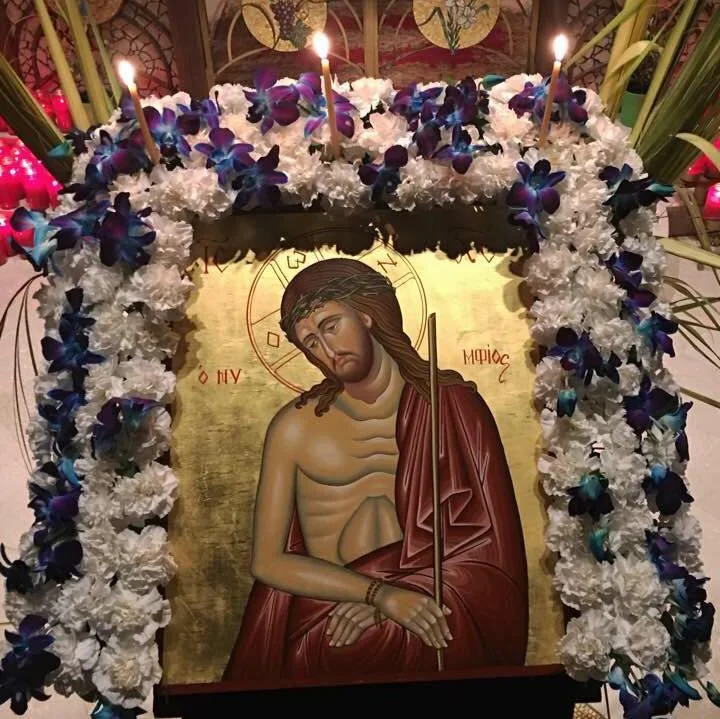
On this evening, we begin with the Hymn of the Bridegroom, "Behold the Bridegroom comes in the midst of the night...beware, therefore, O my soul, lest thou be borne down in sleep...and lest thou be shut out from the Kingdom..." The canticle hymn also has a symbolic exhortation: "I see thy bridal hall adorned, O my Savior, and I have no wedding garment...O giver of Light, make radiant the vesture of my soul and save me." At this time, the solemn procession of the Icon of Christ-Bridegroom takes place around the church. The people, anticipating the sufferings of Christ, sing: "Thy sublime sufferings, on this day, shine upon the world as a light of salvation."
The Gospel reading during this service is Matthew 21:18-43. It mentions that "the chief priests and the elders of the people came up to him as he was teaching, and said, 'By what authority are you doing these things, and who gave you this authority?'" (v. 23) They sought to have Christ accuse Himself in answering this question.